
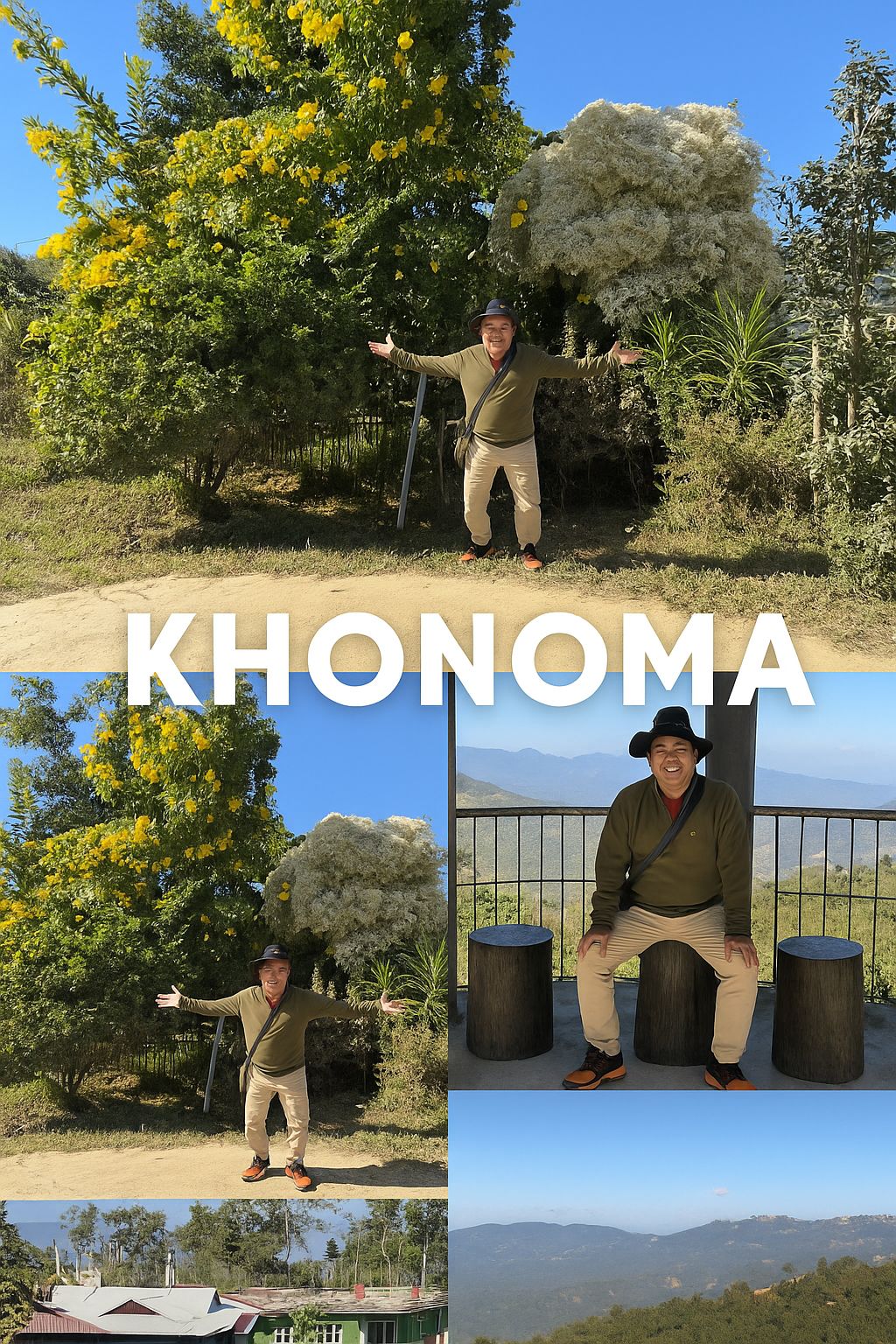
My Journey from Kohima to Khonoma Village
Nestled in the emerald hills of Nagaland, Khonoma is more than just a village — it is a living museum of courage, culture, and ecological wisdom. My journey from Kohima to the historic Angami settlement of Khonoma was a refreshing escape into serenity, heritage, and the crisp mountain air of Northeast India.
Leaving Kohima and Stepping into Clear Blue Skies
The morning in Kohima started bright and cool — the kind of weather that nudges you to begin an adventure. The city slowly gave way to winding roads flanked by wild greenery and terraced fields carved into mountain slopes. As the drive progressed, the hills rolled open in the distance — deep valleys, clear blue skies, and glimpses of remote villages perched on ridges. Each turn felt like entering another postcard.
A Stop at the War Memorial: History in Stone
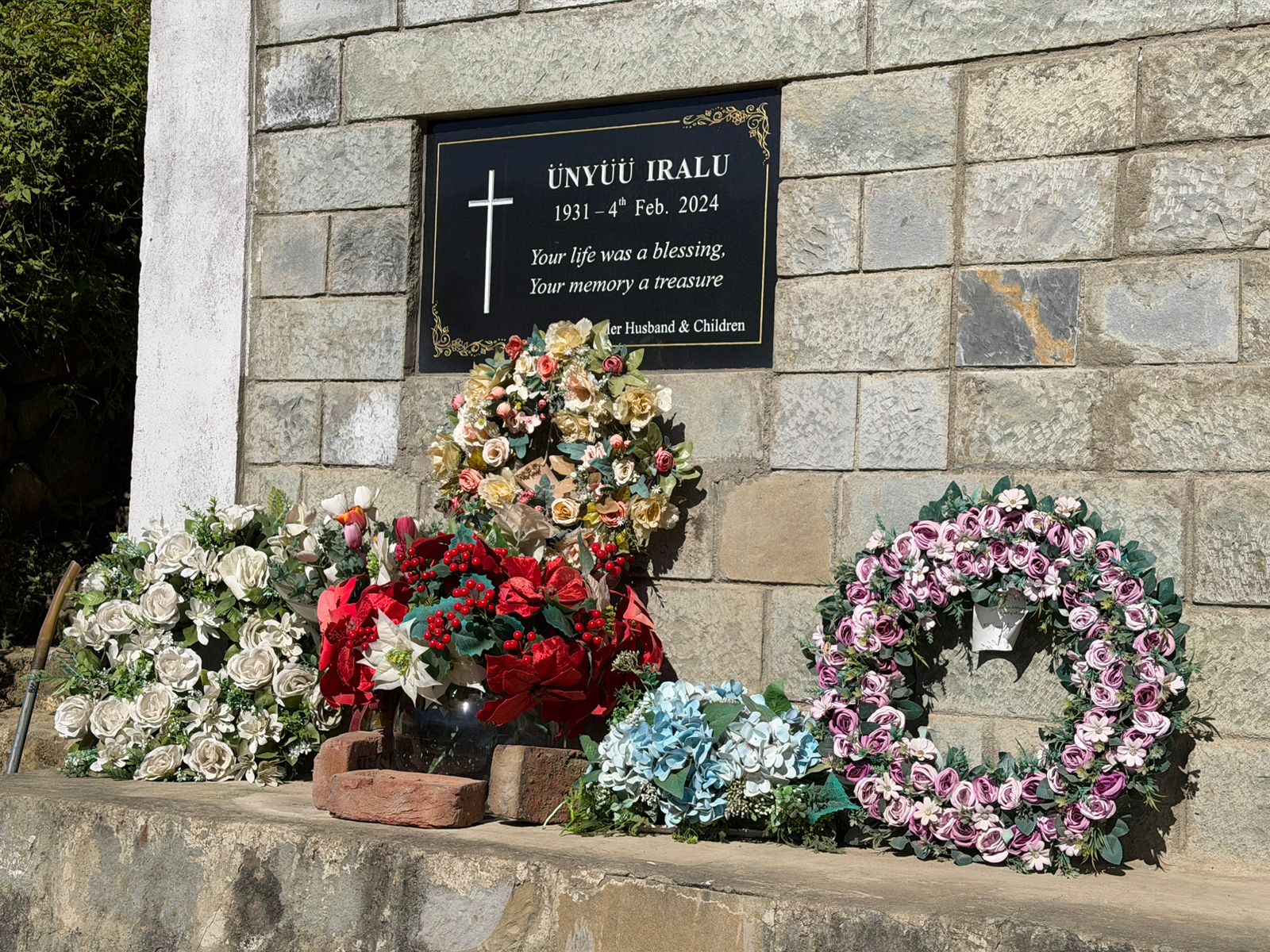
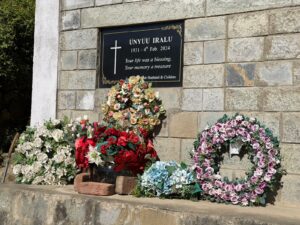
Before reaching Khonoma, I stopped at a solemn stone monument — a tribute to Major General John M. L. Grover and the brave officers and soldiers of the British Army’s 2nd Division who fought in the Battle of Kohima in 1944, often called “Britain’s Greatest Battle.” Standing at the foot of the towering structure, I felt the weight of history. The plaque narrated stories of strategic brilliance, sacrifice, and the crucial role of local communities during the war. With the sun overhead and hills behind, it felt like time had paused.
Into the Heart of Khonoma Village
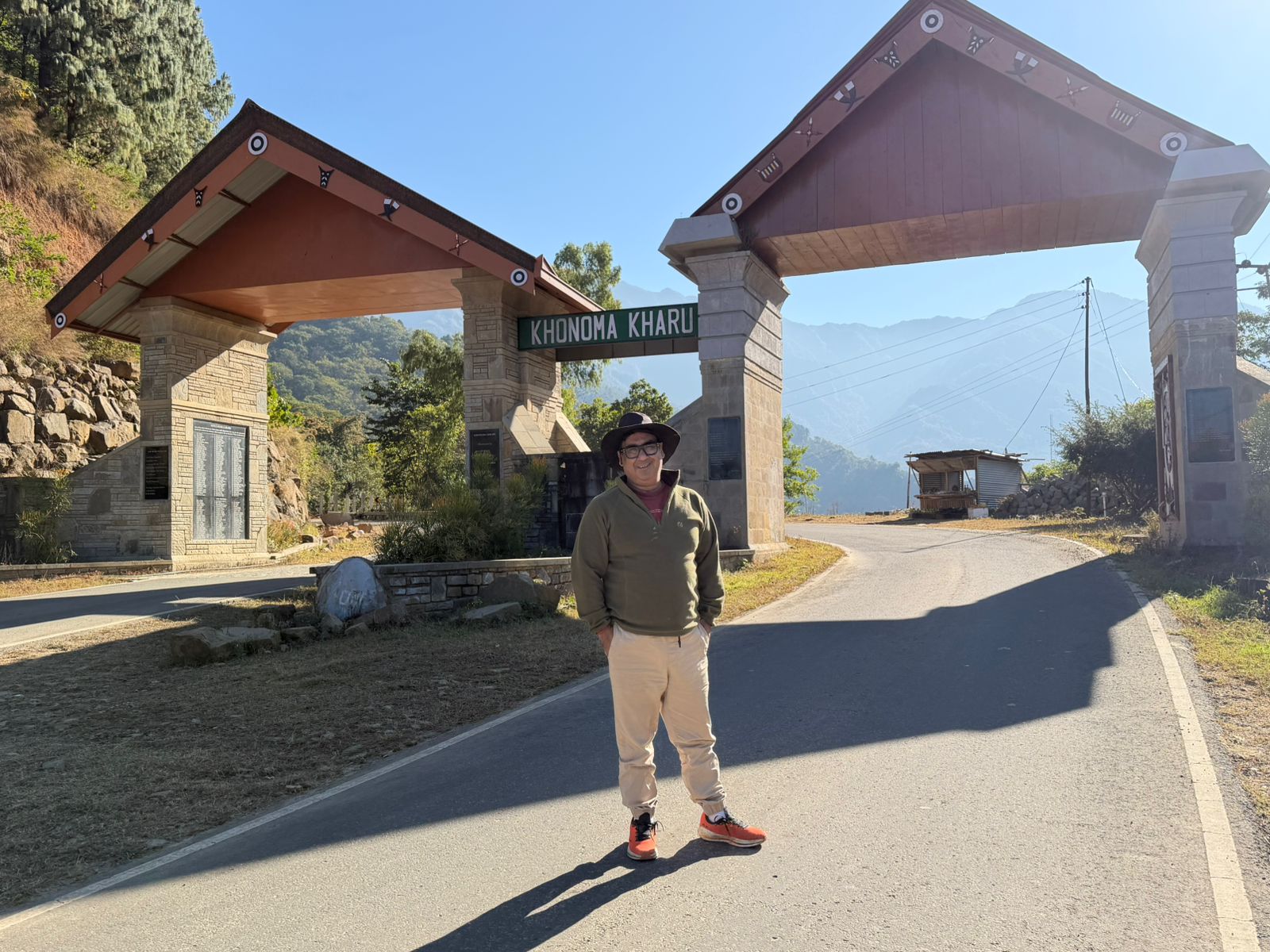
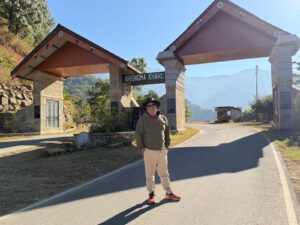
As I entered Khonoma village, the Khonoma Kharu Gate welcomed me — majestic stone pillars and a beautifully carved roof marking the entry into India’s first “Green Village.” Inside, the village unfolded like a terraced dream. Traditional houses with tin roofs clung to the slopes, surrounded by banana groves, bamboo clusters, and stacks of firewood neatly arranged outside homes. Children played on narrow paths, while the scent of woodsmoke floated lazily in the cool air.
Kohima to Khonoma Village
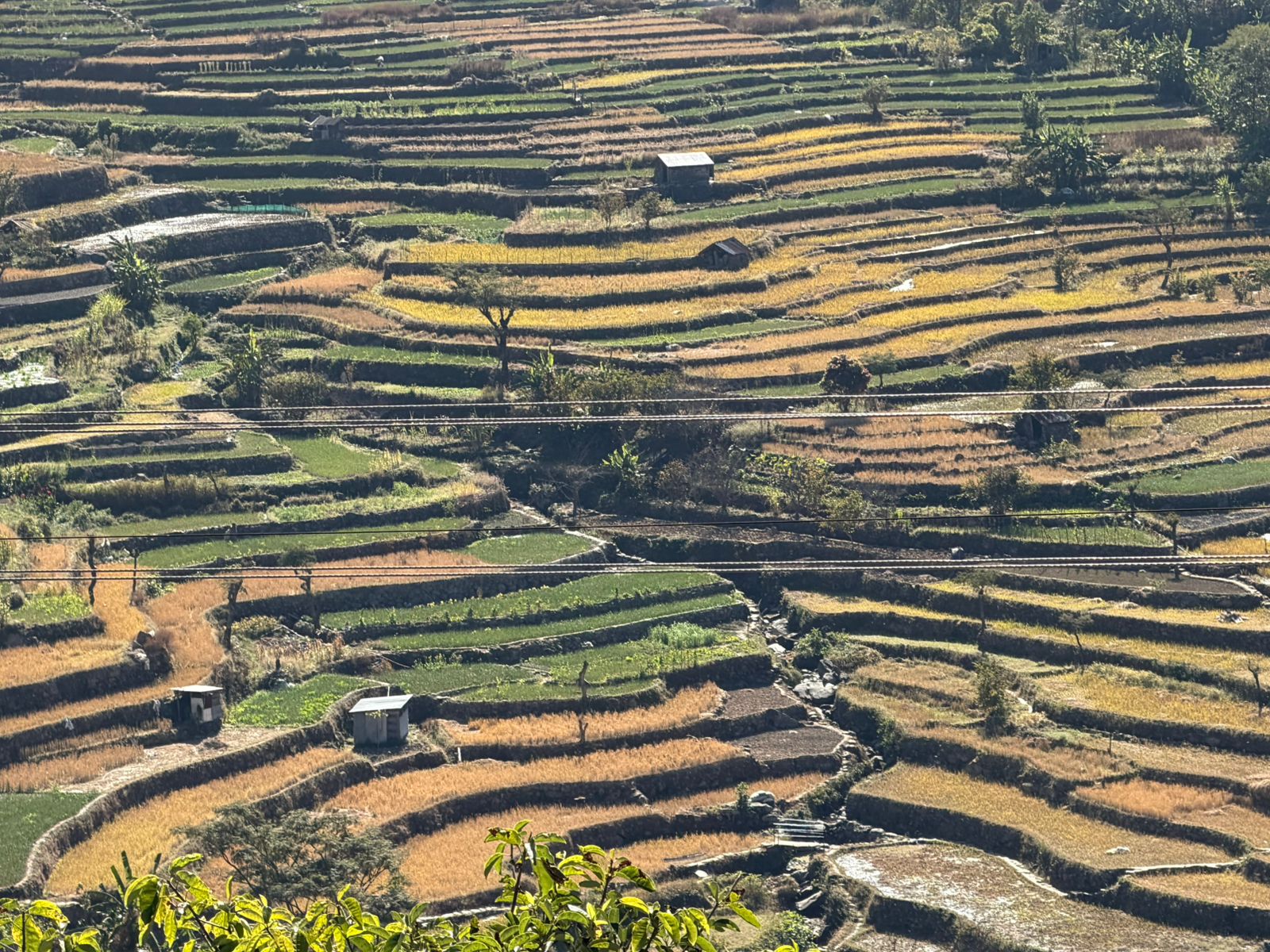
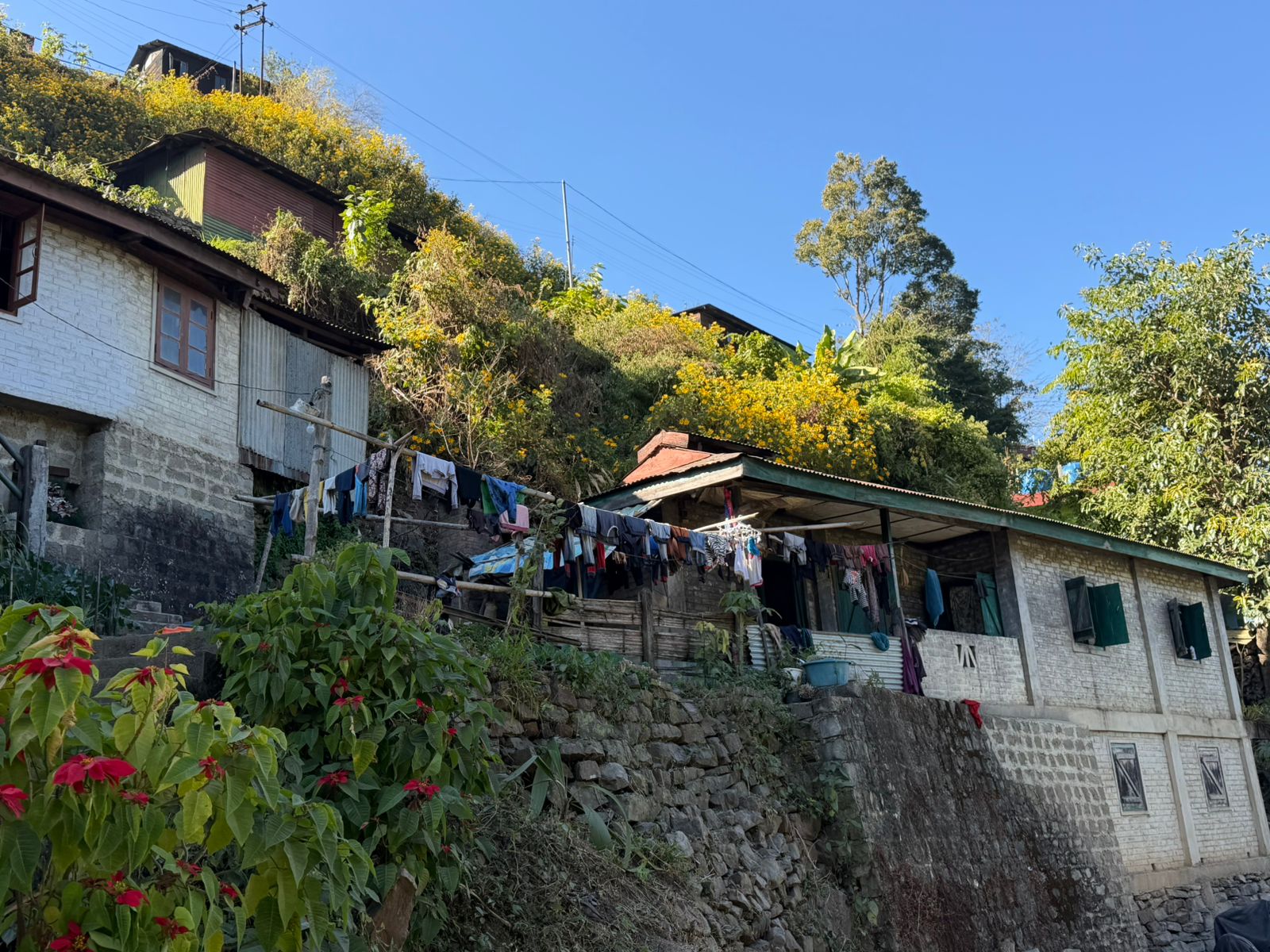
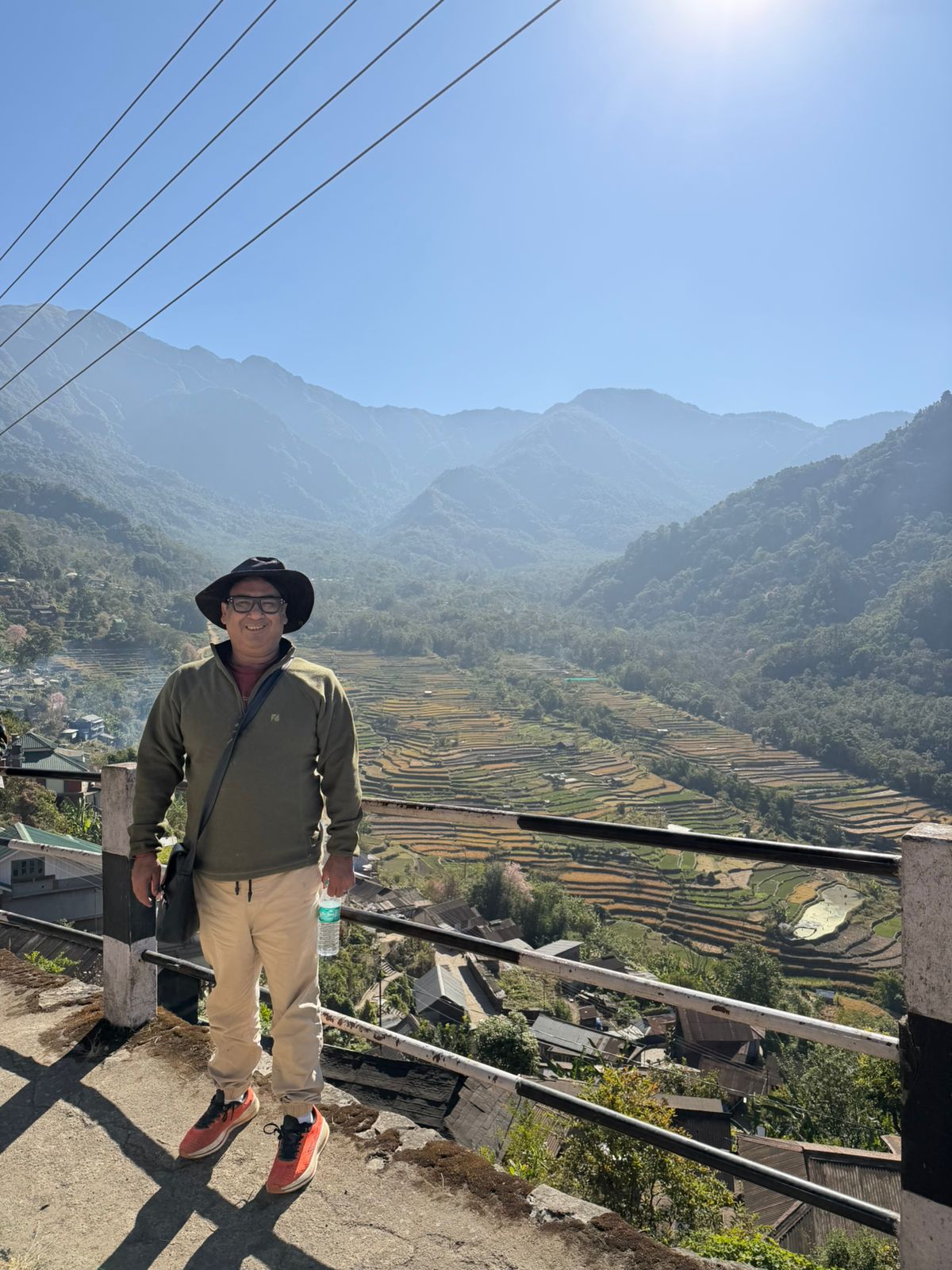
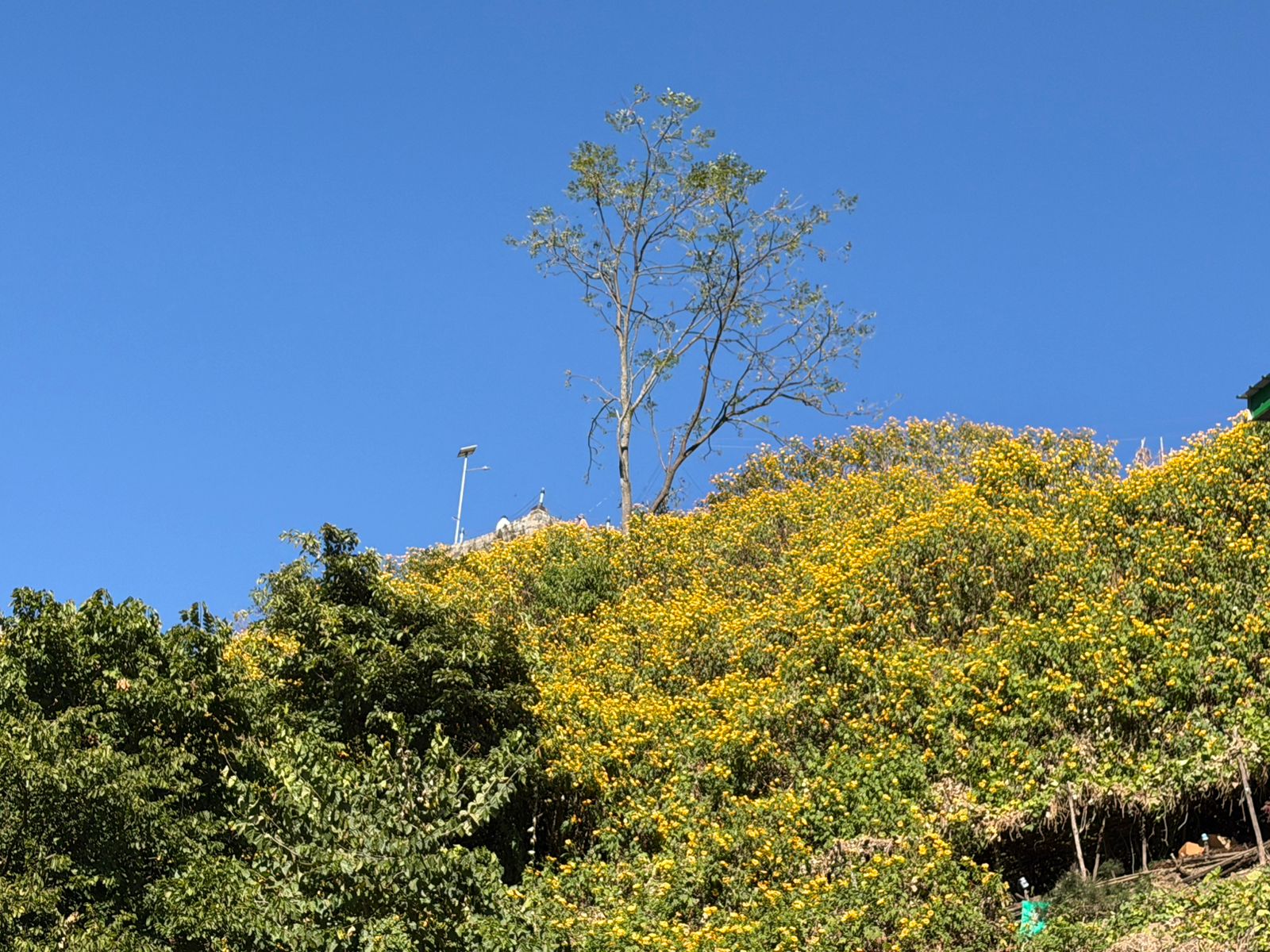
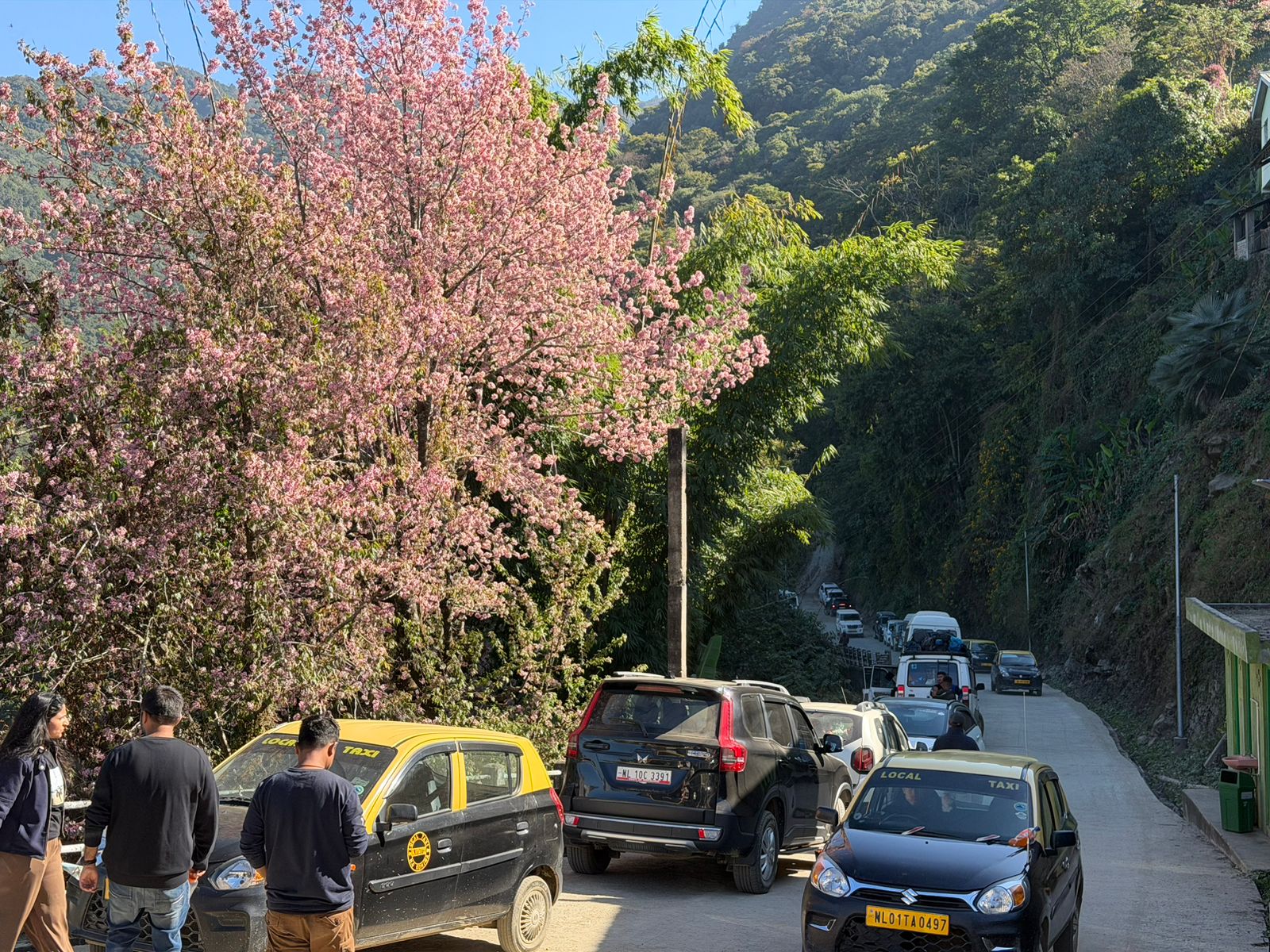
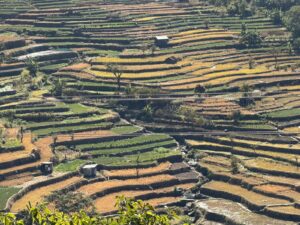

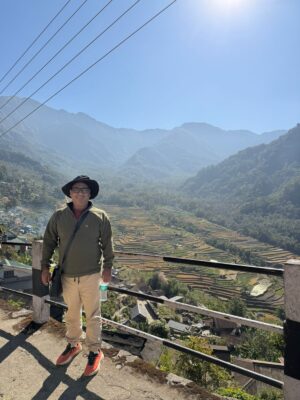

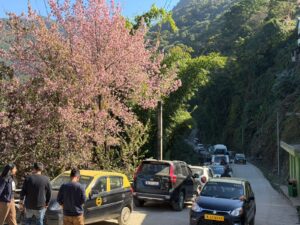
Everywhere I looked, nature and community coexisted in harmony. Khonoma is famous for its conservation legacy and is considered one of the cleanest villages in India. The roads and homes are almost dust-free. Decades ago, the Angami tribe banned hunting and protected their forests with exceptional discipline and pride. The village is full of beautiful flowers — yellow, red, and orange — and the view of the hills and mountains takes your breath away. From various vantage points, the valley opened up in front of my eyes. The mountains rippled endlessly, washed in shades of deep green under the bright December sky.
Time slowed down as I stood there, soaking in the tranquility that only a hill village untouched by chaos can offer.
The Open Book Store
The most fascinating thing I saw in the village was the KSU Mini Library. It stood by the roadside — a large wooden and glass cabinet with all sorts of books: from novels to mystery to spiritual writings. One could simply open the glass window and pull out a book they wished to read. It is the borrower’s responsibility to return it. The remarkable part was that there was no librarian — everything operated on trust.
This reminded me of the “open vegetable shops” without vendors that I first saw in Mizoram. It shows how high the level of social consciousness is in these small villages. No one steals or cheats; they are a close-knit community that looks after one another. Unlike large metropolitan cities, there is hardly any crime here. One reason is that everyone is of the same income group or has similar material means — there is very little wealth disparity, and therefore, very little crime and a high level of trust among the people.
The Simple Village Life
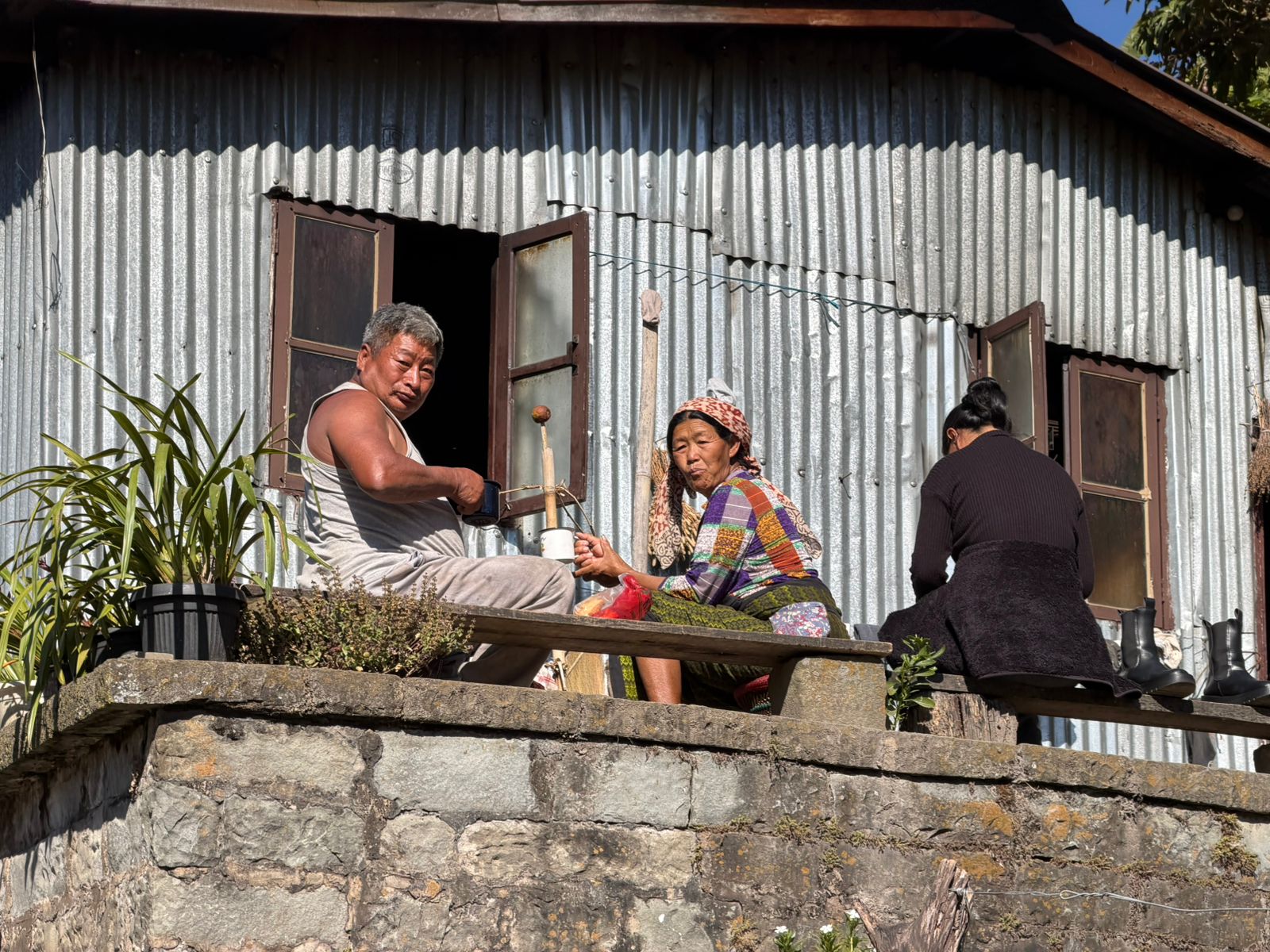
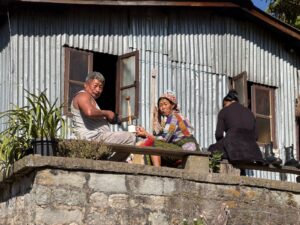
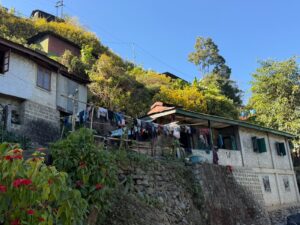
Walking deeper into Khonoma, I saw neat little homes perched on stone terraces, clothes drying on railings, and small gardens blooming in every corner. A few villagers waved, and children peered curiously from doorways. Life here flows at its own gentle pace. The warmth of the people added to its charm.
The people of the village love social work. I saw a few local families on a picnic who had also come to clean up the streets and the hills. There was a real sense of community here, which is sadly lacking in large metro cities of India. The vibe here was fantastic.
Add a review
Your email address will not be published. Required fields are marked *