

The Rudabai Stepwell: A Cathedral Beneath the Earth
Some places don’t announce themselves loudly. They invite you to descend. The Rudabai Stepwell—also known as Adalaj ni Vav—is not a monument you walk into. It is a space you sink into, step by step, layer by layer, until the world above feels distant and unnecessary.
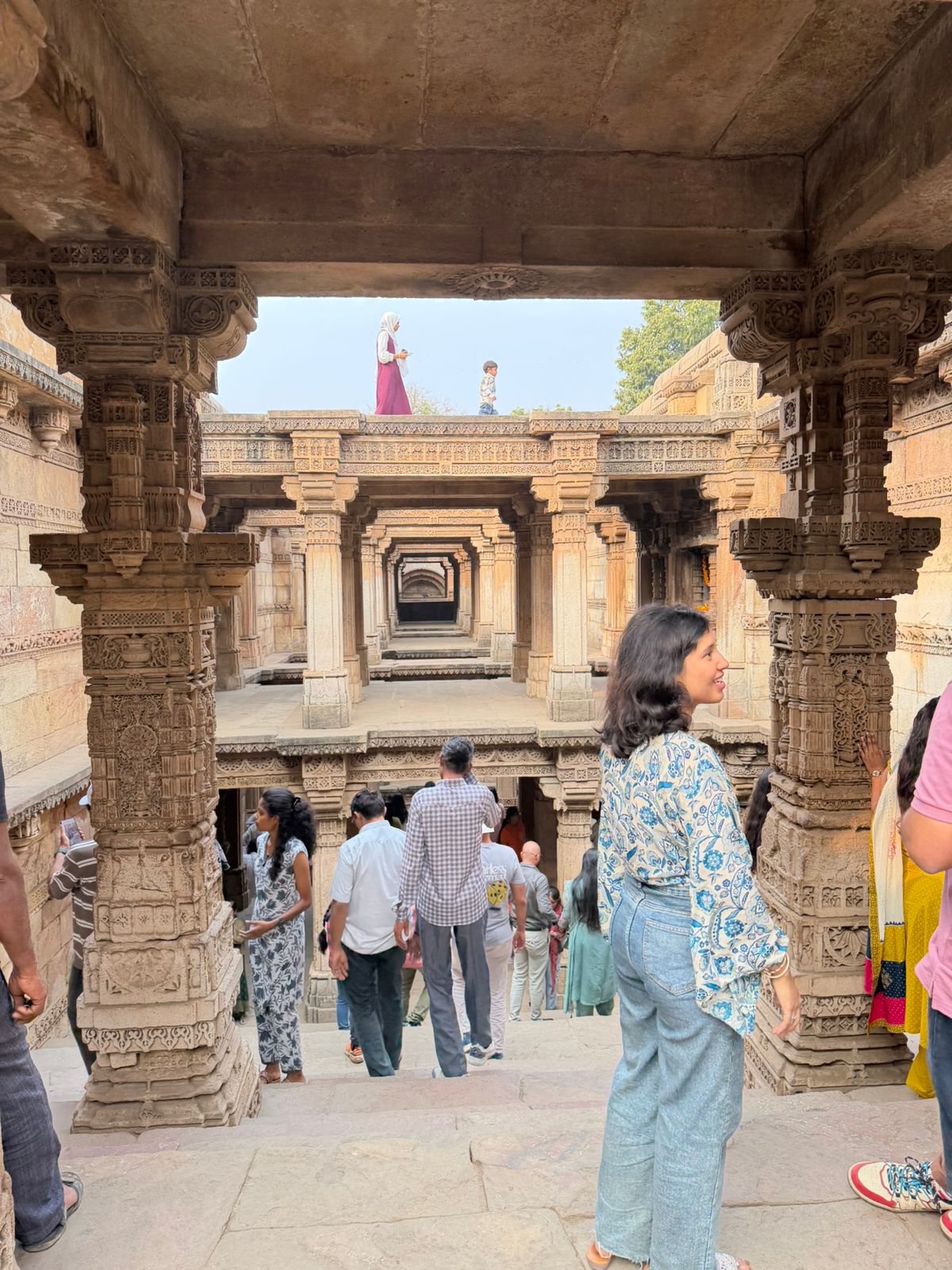
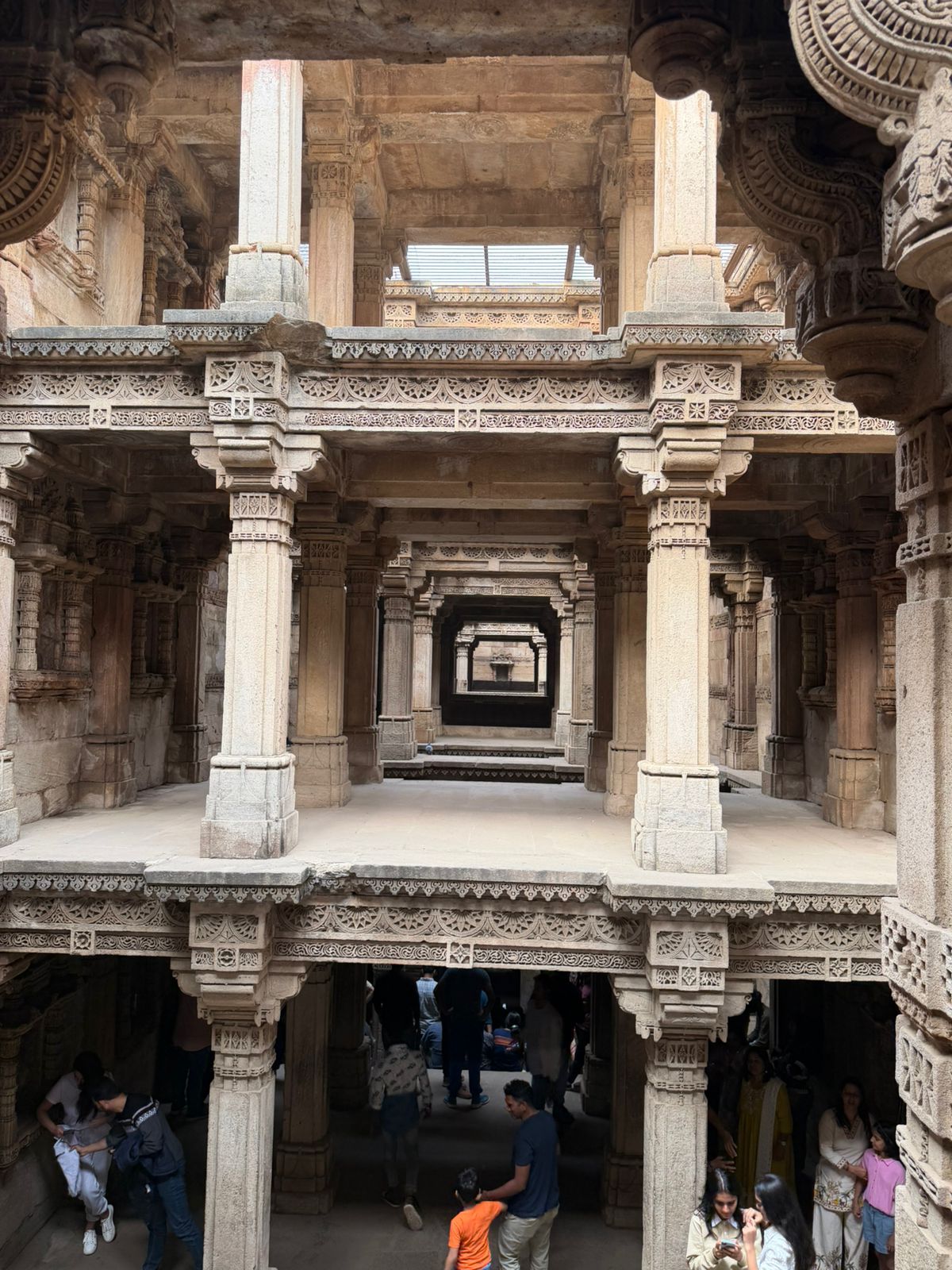
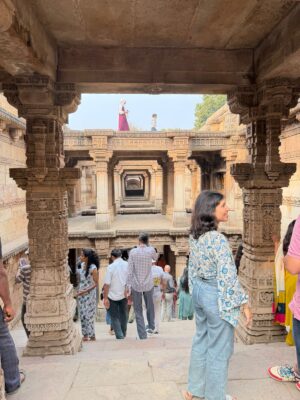
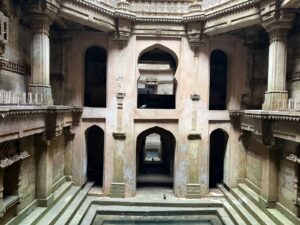
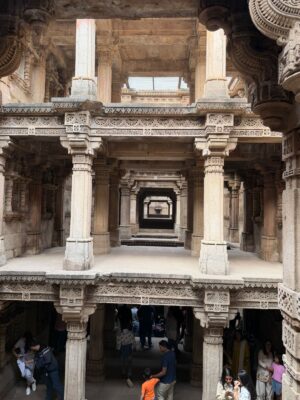
Standing at the edge, the first thing you notice is geometry—rows of stone pillars receding into darkness, perfectly aligned, impossibly precise. Photographers capture this rhythm beautifully: a hypnotic repetition of columns, balconies, and carved beams that seem to stretch into infinity.
Architecture That Breathes
What makes the Rudabai Stepwell extraordinary is not just its age (built in 1499), but its engineering empathy. The deeper you go, the cooler the air becomes. The stone absorbs heat, filters light, and softens sound. Even in a crowd, there is a strange calm—visible in the way people instinctively slow down on the steps.
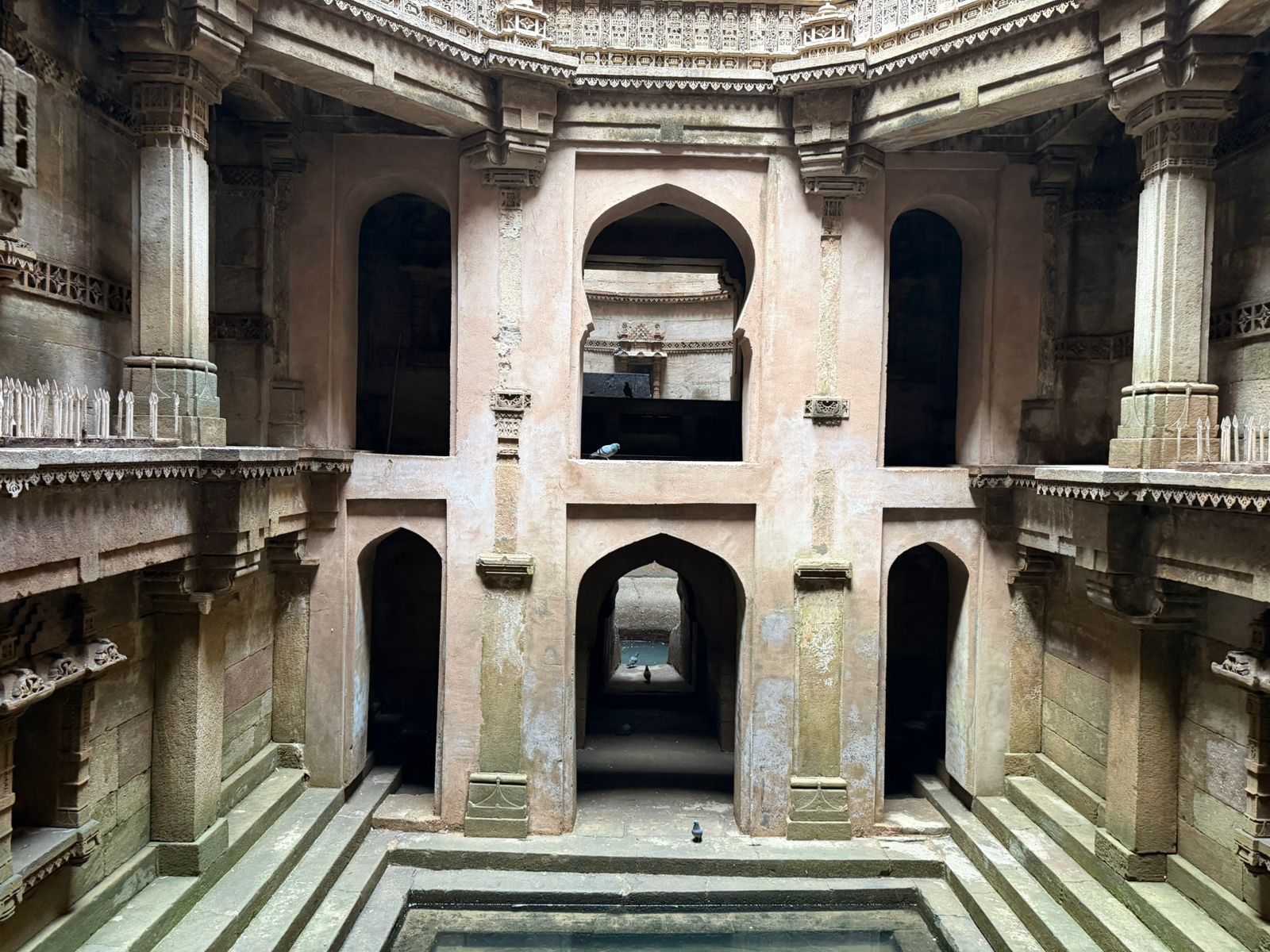
Each level opens into a new visual frame: intricately carved brackets, floral and geometric borders, and balconies stacked like a stone honeycomb. Light is carefully choreographed—bright at the top, dusky and contemplative below. It feels less like architecture and more like a sculpted atmosphere.
Rudabai Stepwell





A Meeting of Cultures, Etched in Stone
Look closely at the carvings and you will see a conversation between worlds. Hindu motifs—lotuses, deities, sacred symbols—coexist with Islamic arches and symmetry. This fusion isn’t forced; it is fluid, natural, almost inevitable. The Rudabai Stepwell doesn’t argue with history—it absorbs it.
People as Scale, Not Disruption
One of the most powerful moments comes when visitors appear on the steps—suddenly, the scale becomes real. The stepwell dwarfs everyone equally. No matter who you are, you become a passing figure inside something far older and far larger. Here, people don’t dominate the space; they complete it.
More than a water structure, it was built to store water and serve as a community space. But standing inside, you realise it was also a place of pause—a place where women gathered, travellers rested, conversations slowed, and silence was respected. The symmetry calms the mind. The depth pulls thoughts inward. It feels almost meditative—a stone reminder that survival and beauty were once designed together.
Leaving the Depths
Climbing back up feels symbolic. Light returns gradually. Noise creeps in. The modern world waits patiently at the top. Yet something stays with you—an awareness that centuries ago, people built not only for utility, but for grace. The Rudabai Stepwell doesn’t demand admiration; it earns it—quietly, from below.

Add a review
Your email address will not be published. Required fields are marked *