
A Quiet Moment at the Cathedral of Bom Jesus, Daman
Travel often brings us to places that surprise us with their quiet dignity. During my wanderings through the historic Portuguese quarter of Moti Daman, I found myself standing before one of the most beautiful colonial-era churches on India’s western coast — the Cathedral of Bom Jesus.
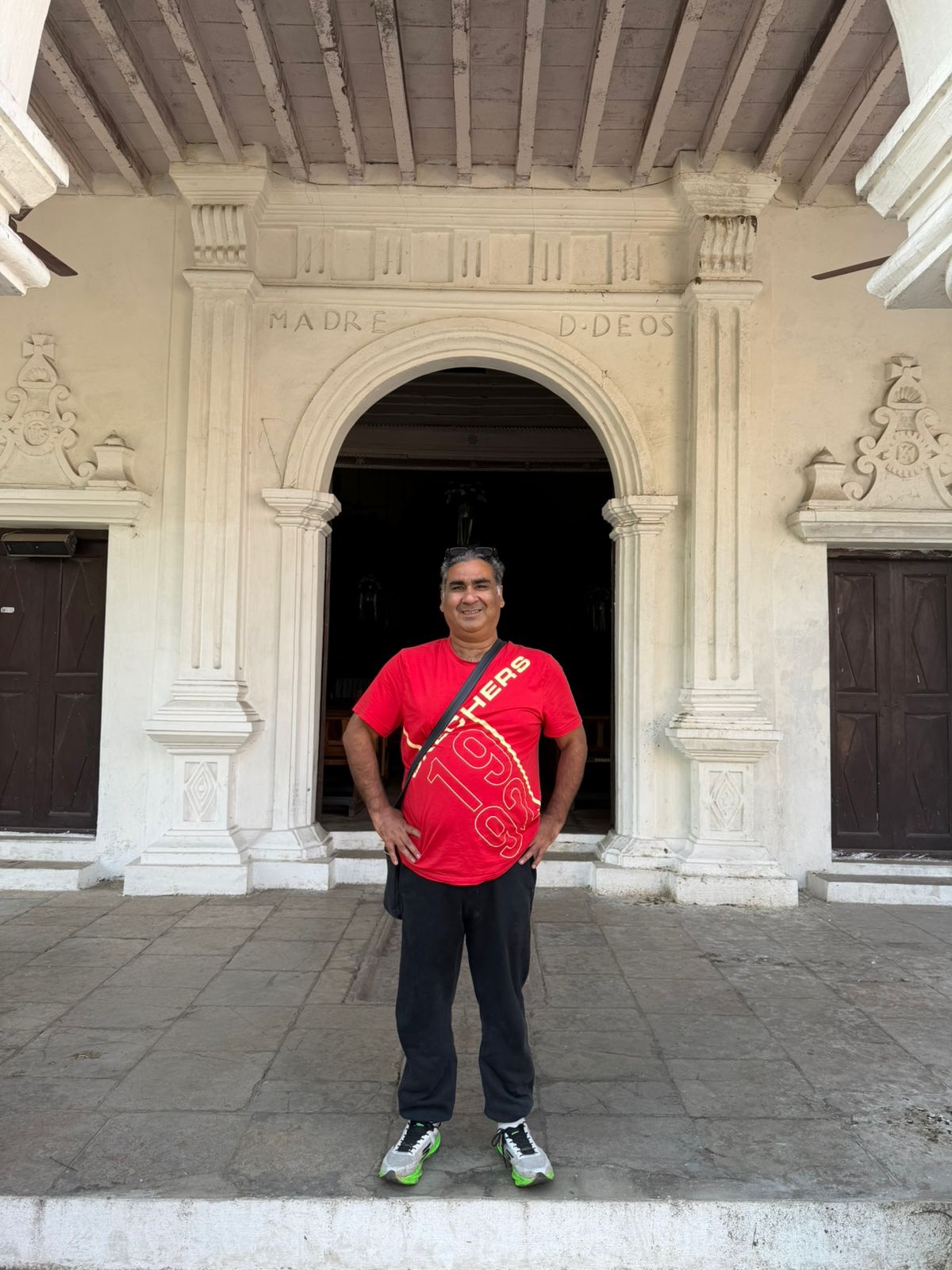
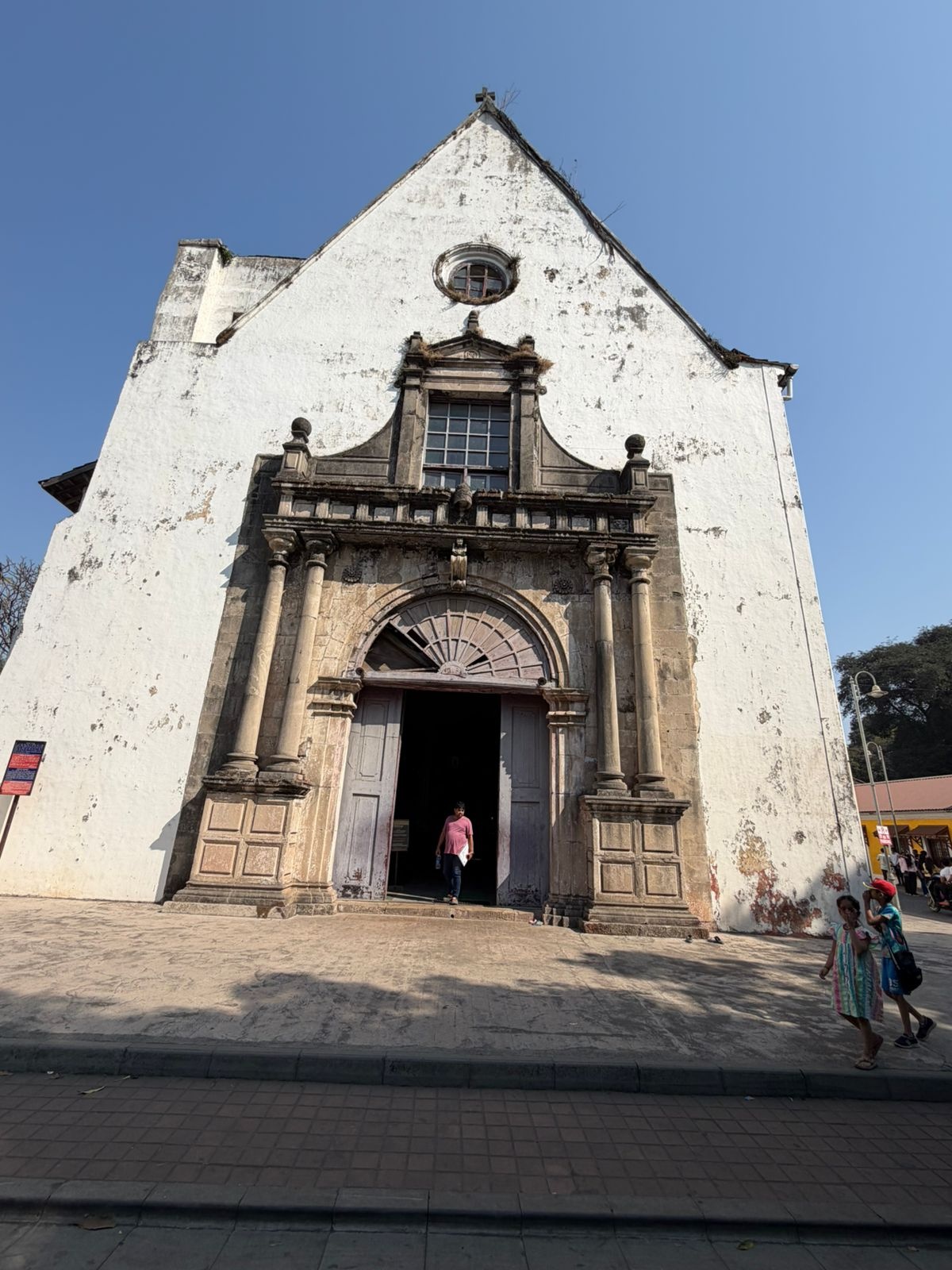
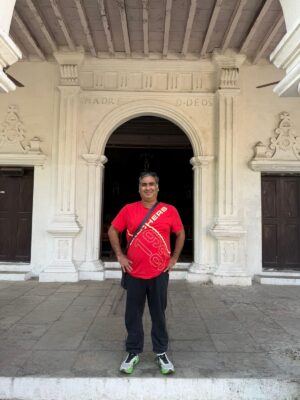
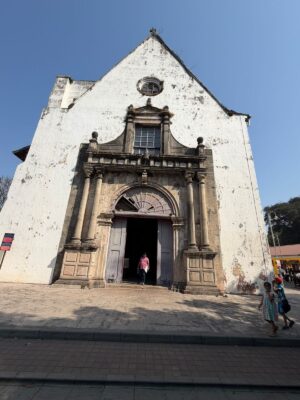
The white façade of the church stood calm and dignified under the bright coastal sun. Its architecture was simple yet deeply elegant, a reminder of the centuries when Portugal ruled this small pocket of India. The entrance was framed with classic Baroque stonework — thick pillars, carved detailing, and an arched doorway that invited visitors into a quieter world.
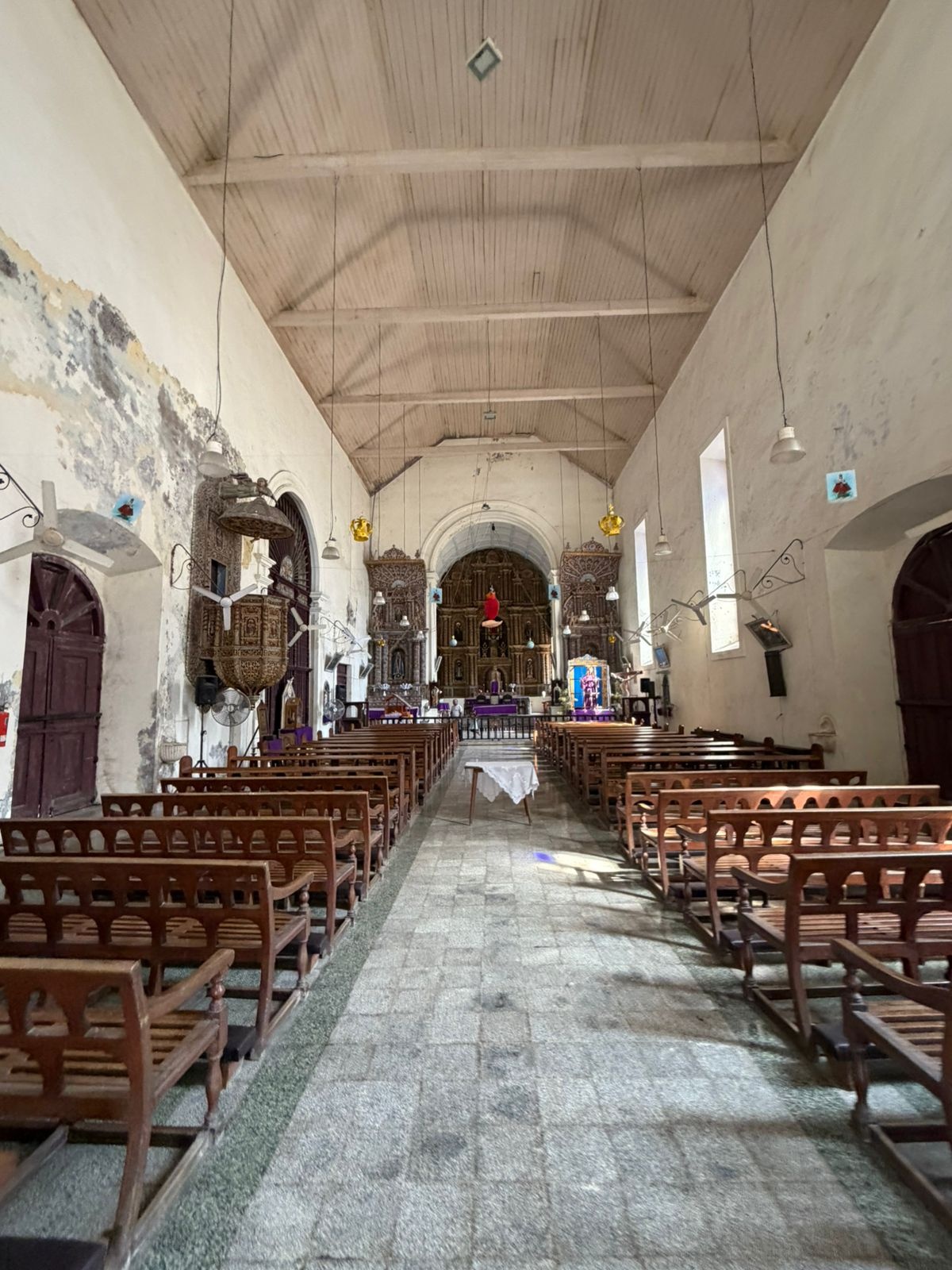
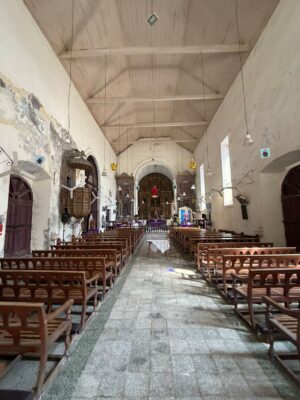
As I stepped inside, the atmosphere changed instantly. The noise of the outside streets faded away, replaced by the cool stillness of a centuries-old cathedral. Long rows of wooden pews stretched down the central aisle, their polished surfaces reflecting years of devotion and prayer.
Walking slowly through the nave, I felt as though I had stepped into another era. The interior seemed simple at first glance, but as my eyes adjusted, the true beauty of the church began to reveal itself.
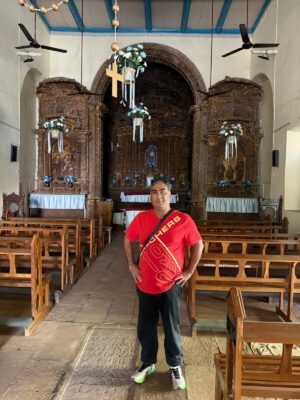
At the far end stood the magnificent altar — a breathtaking piece of carved woodwork. Intricate wooden panels, arches, and columns formed a towering structure behind the altar, decorated with statues of saints and delicate floral carvings. The craftsmanship was remarkable. Every inch seemed to carry the touch of artisans who had worked here more than four centuries ago.
The cathedral, built in 1603, was constructed during the height of Portuguese influence in Daman. Dedicated to Bom Jesus — meaning “Good Jesus” — it served as one of the most important religious centres in the region. Standing there, it was impossible not to feel the weight of history surrounding the place.
I paused in the middle of the church for a moment, absorbing the silence. Sunlight streamed through the tall windows, casting soft patterns across the stone floor. Above, simple wooden beams stretched across the ceiling, giving the space a warm, almost humble character despite the grandeur of the altar.
Cathedral of Bom Jesus, Daman
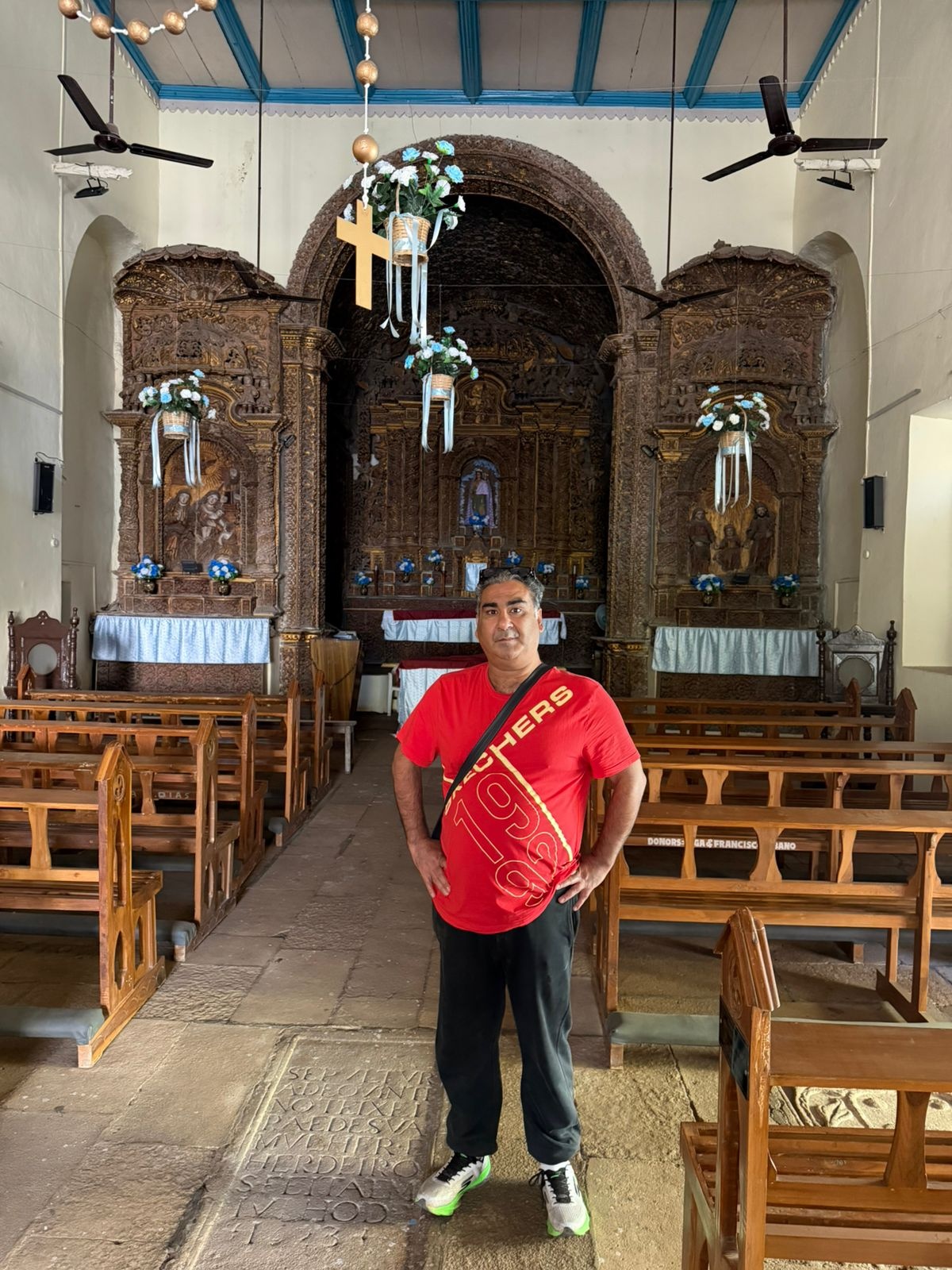
One of the most fascinating details was the stone inscriptions embedded in the floor — centuries-old memorials to people who once lived in this colonial settlement. Each inscription told a quiet story of life in Portuguese Daman.
Outside, the streets of Moti Daman Fort carried the rhythm of modern India. But inside the cathedral, time seemed to move at a much slower pace. Standing there for a photograph beneath the carved altar, I couldn’t help but reflect on how places like this connect different cultures and centuries. Portuguese architecture, Indian surroundings, and centuries of faith had all merged into one extraordinary monument.
My visit to the Cathedral of Bom Jesus was not just about seeing another historical building; it was about experiencing a small piece of living history. In the town of Daman, where the sea breeze carries whispers of the past, this cathedral remains a quiet guardian of its colonial heritage.
As I stepped back out into the bright afternoon light, I carried with me the peaceful memory of a place where history, faith, and architecture come together in beautiful harmony.



Add a review
Your email address will not be published. Required fields are marked *