
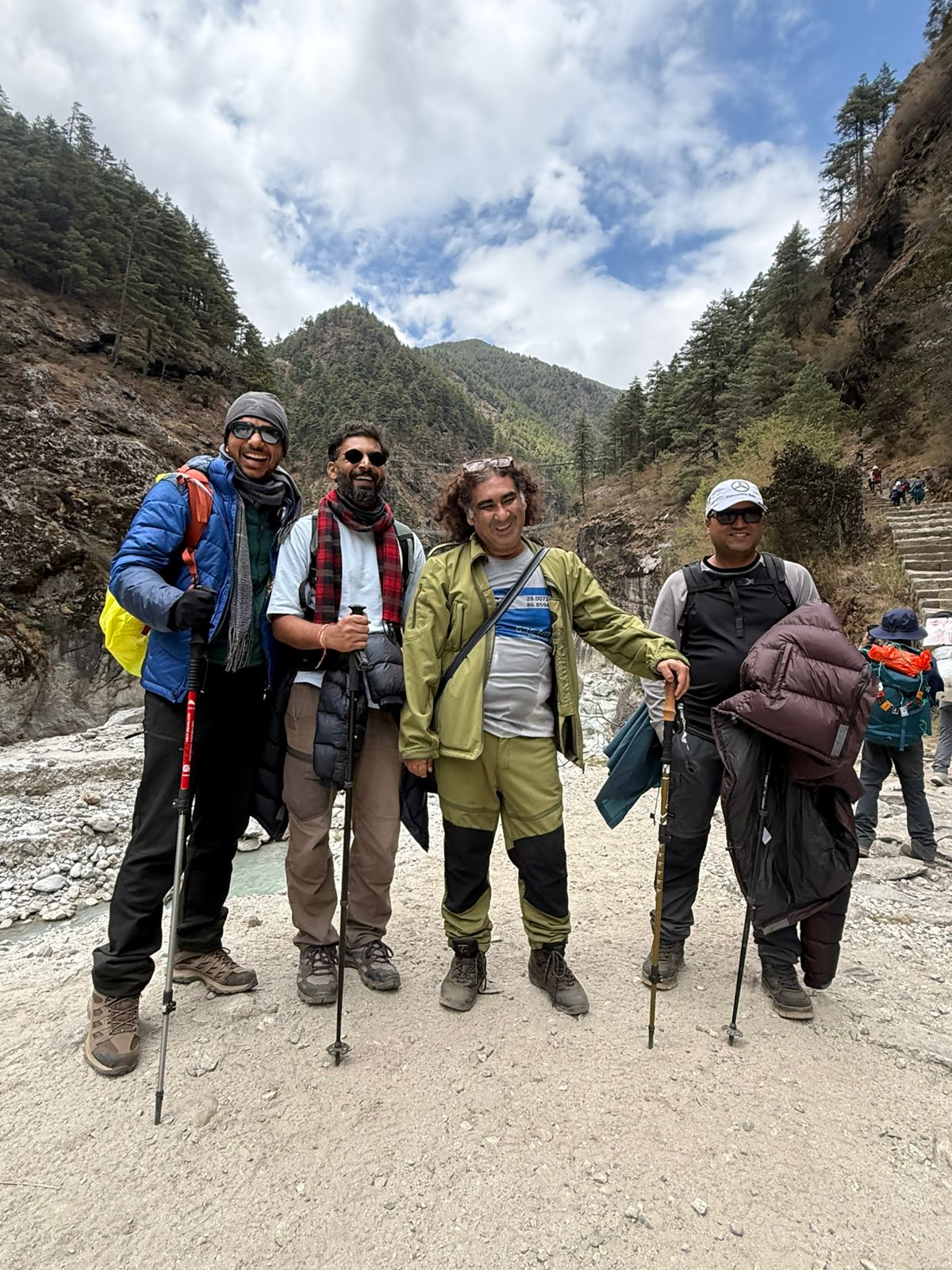
Phakding to Namche Bazaar
Here’s your revised text with corrected grammar, spelling, punctuation, and smoother phrasing for clarity and readab
This was a treacherous trek for all of us, as Namche Bazaar is at quite an incline. The entire trek took over six hours, and I often found myself short of breath. Phakding is at an elevation of 2,650 metres, and Namche Bazaar is at 3,440 metres. The trek covered a total distance of 11.7 km — and man, it was strenuous.
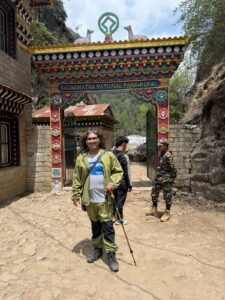
Phakding is a small Sherpa village in the Khumbu region of Nepal. It is situated on the banks of the Dudh Koshi River and serves as a rest stop for trekkers on their way to Everest Base Camp. The scenery is stunning, with lush green mountains and mist-covered clouds. Phakding is located within Sagarmatha National Park, which is renowned for its botanical and zoological richness. It is also a UNESCO World Heritage Site.
The locals, mainly Sherpas, provide various services to travellers, including equipment rentals and backpacking assistance. A lot of cargo moves up and down the mountain trails on the backs of ponies and mules, and one has to be very careful while trekking. It’s best to stay on the right side of the trail to avoid collisions with these beasts of burden. The Sherpas are impressively strong, often carrying heavy loads up and down the trails. At times, I felt so sorry for them — some were carrying massive loads on their backs, trekking without even proper footwear.
Namche Bazaar
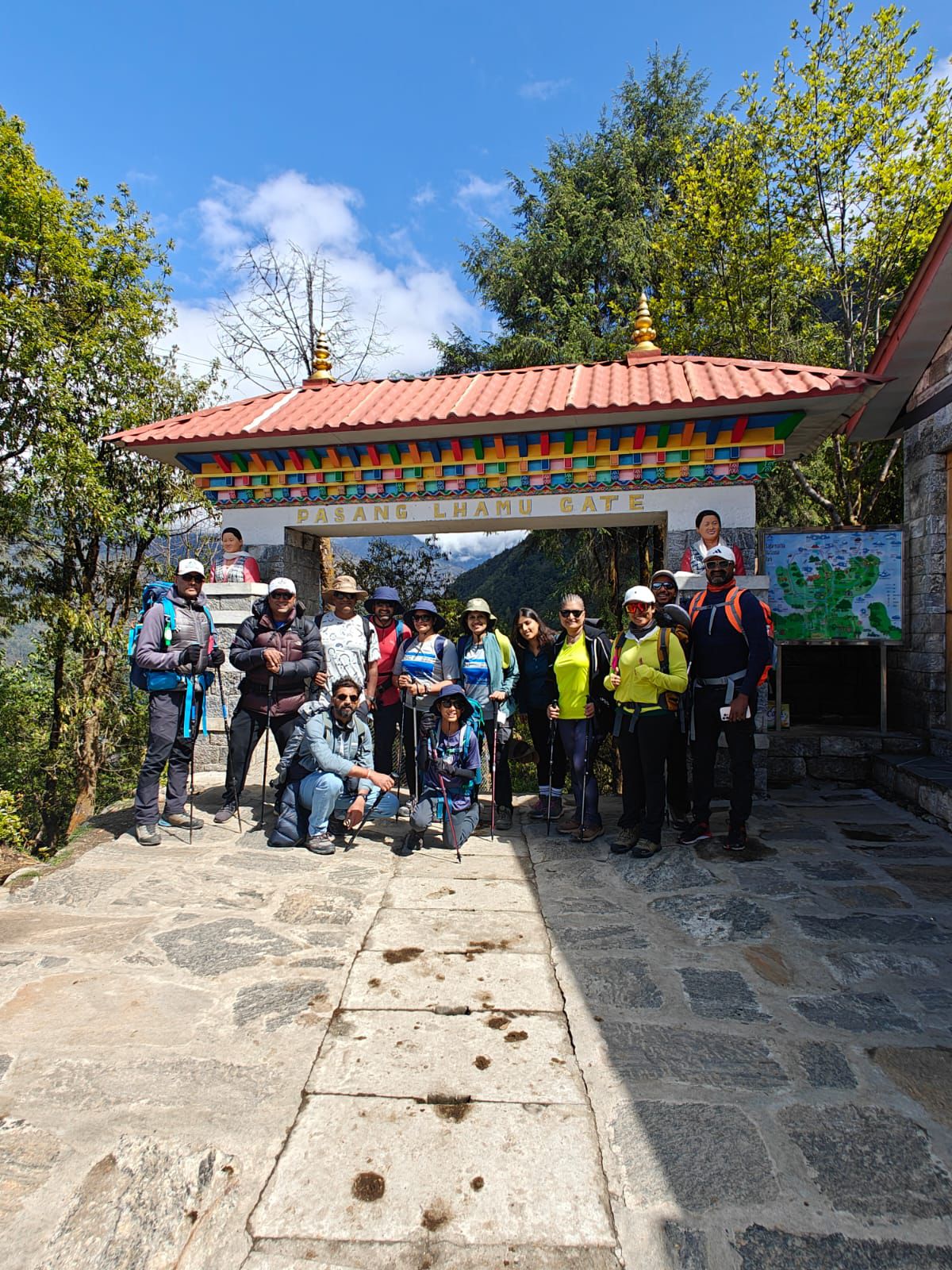
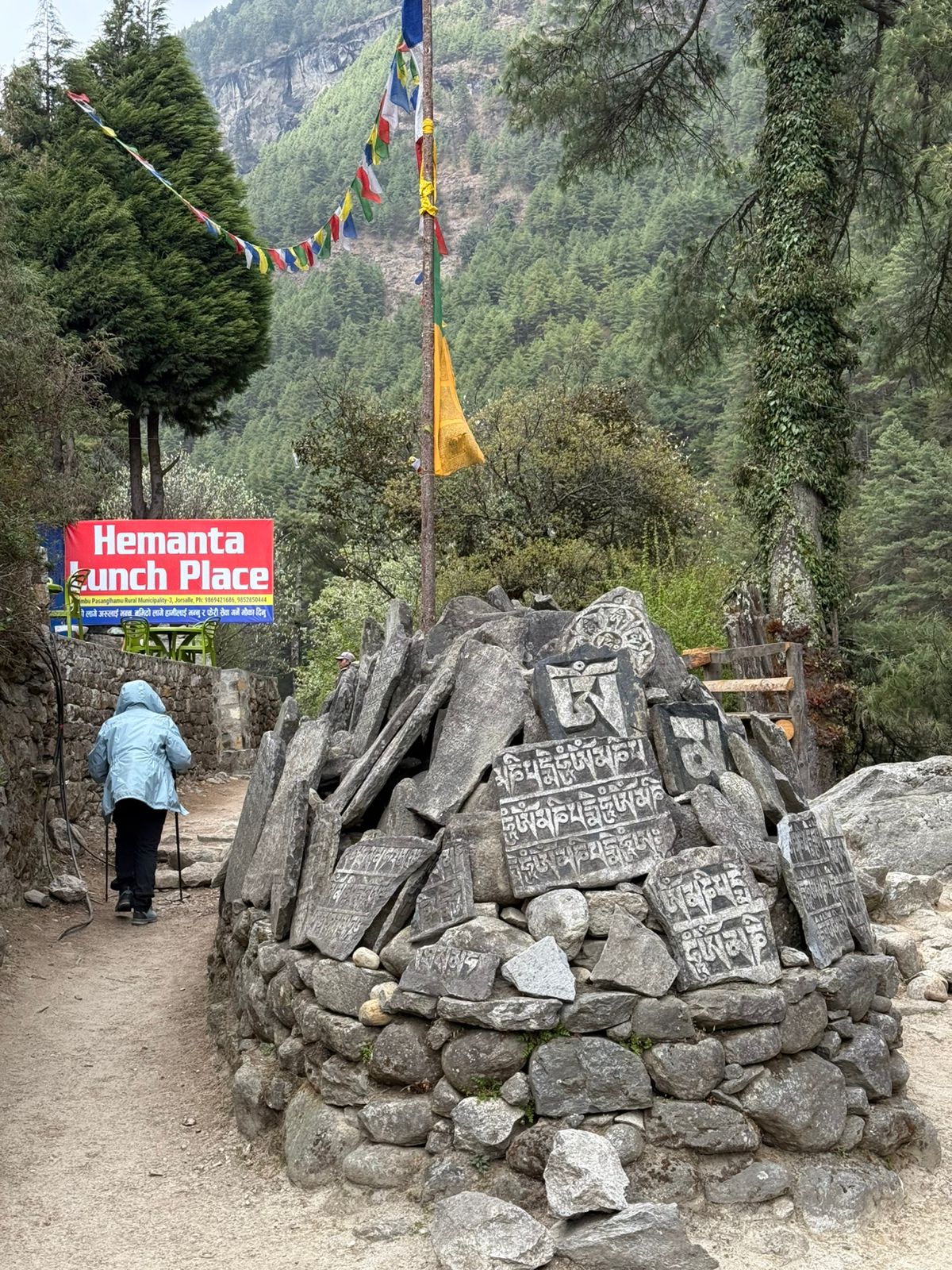
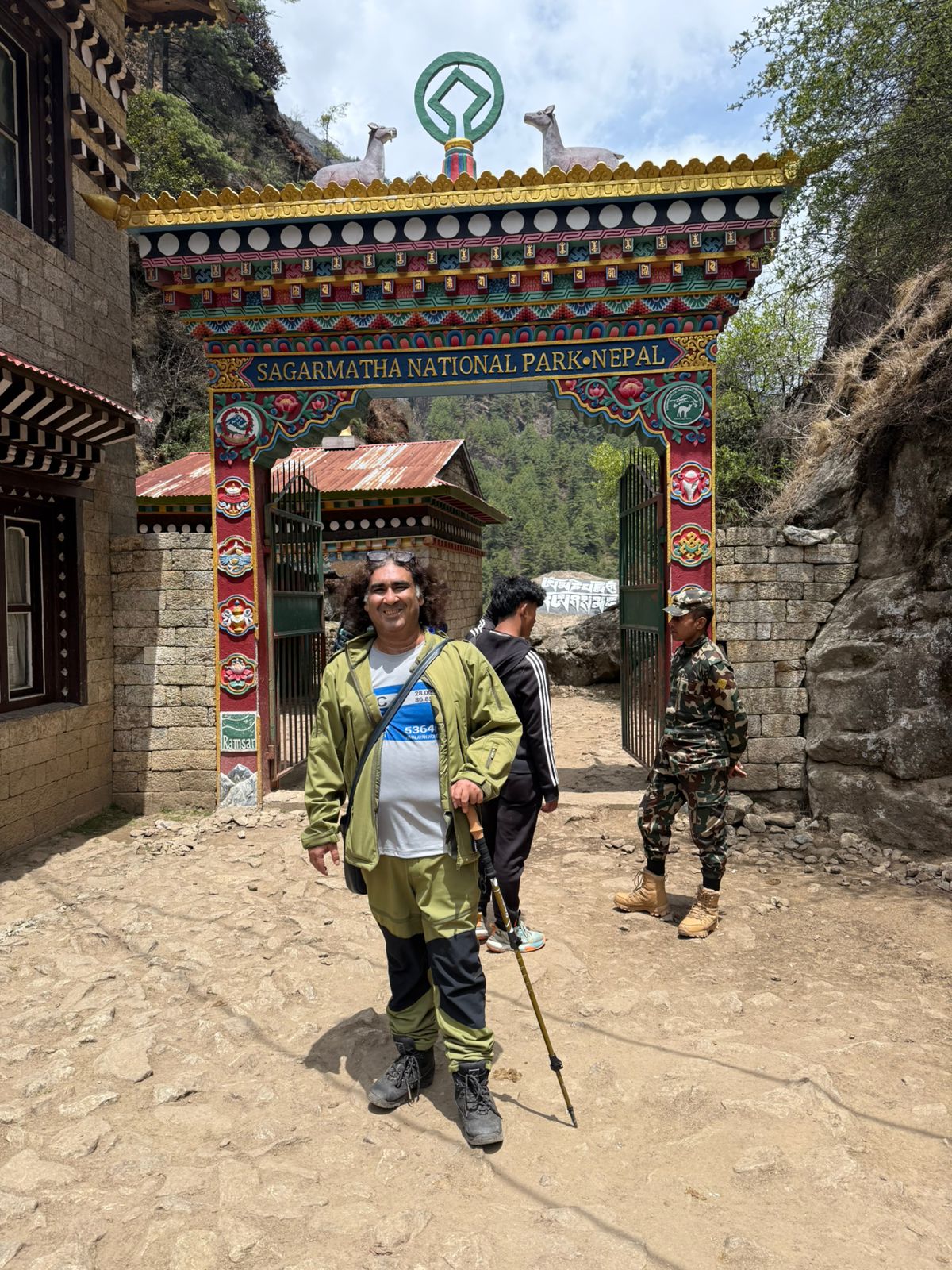
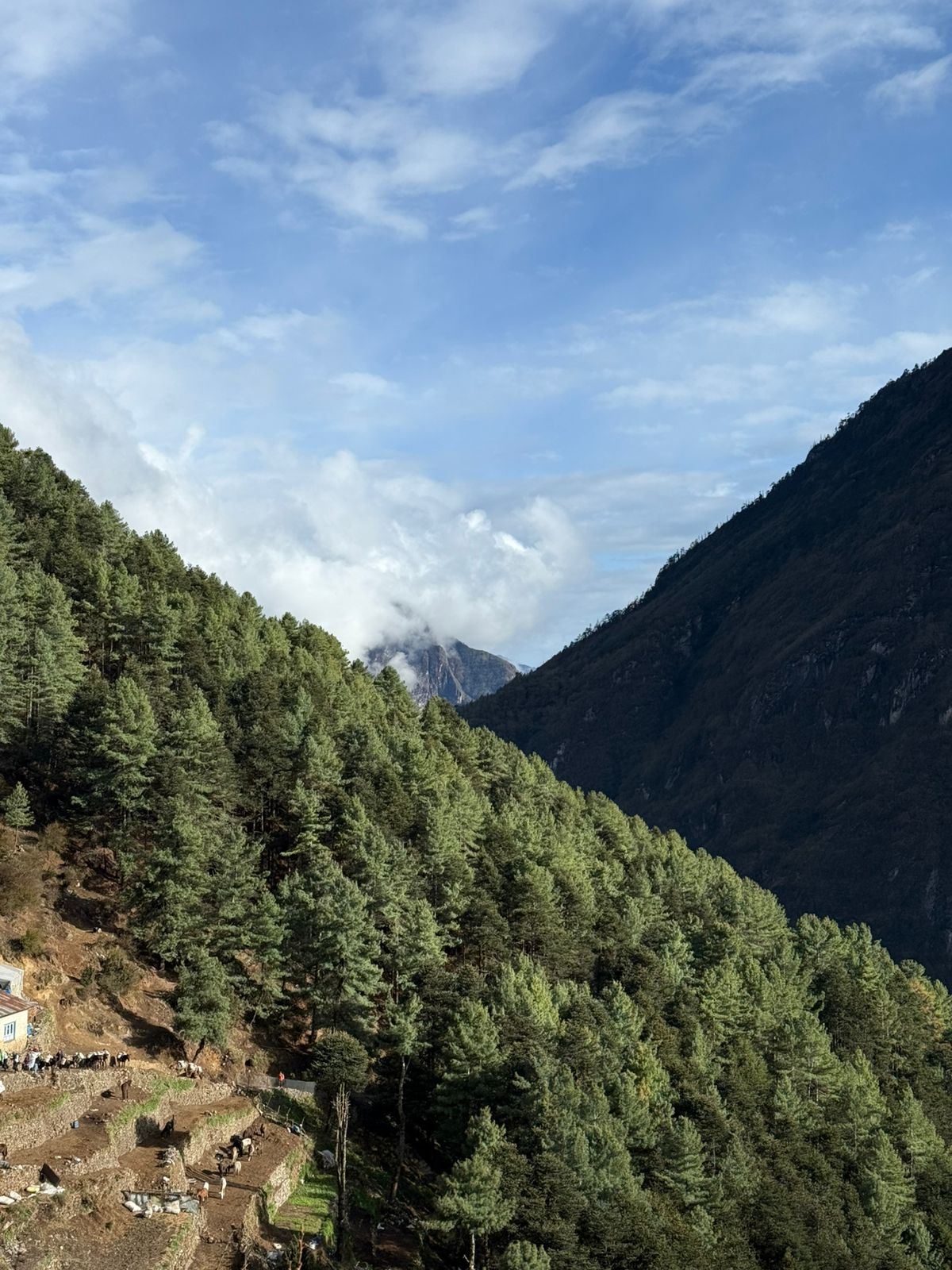
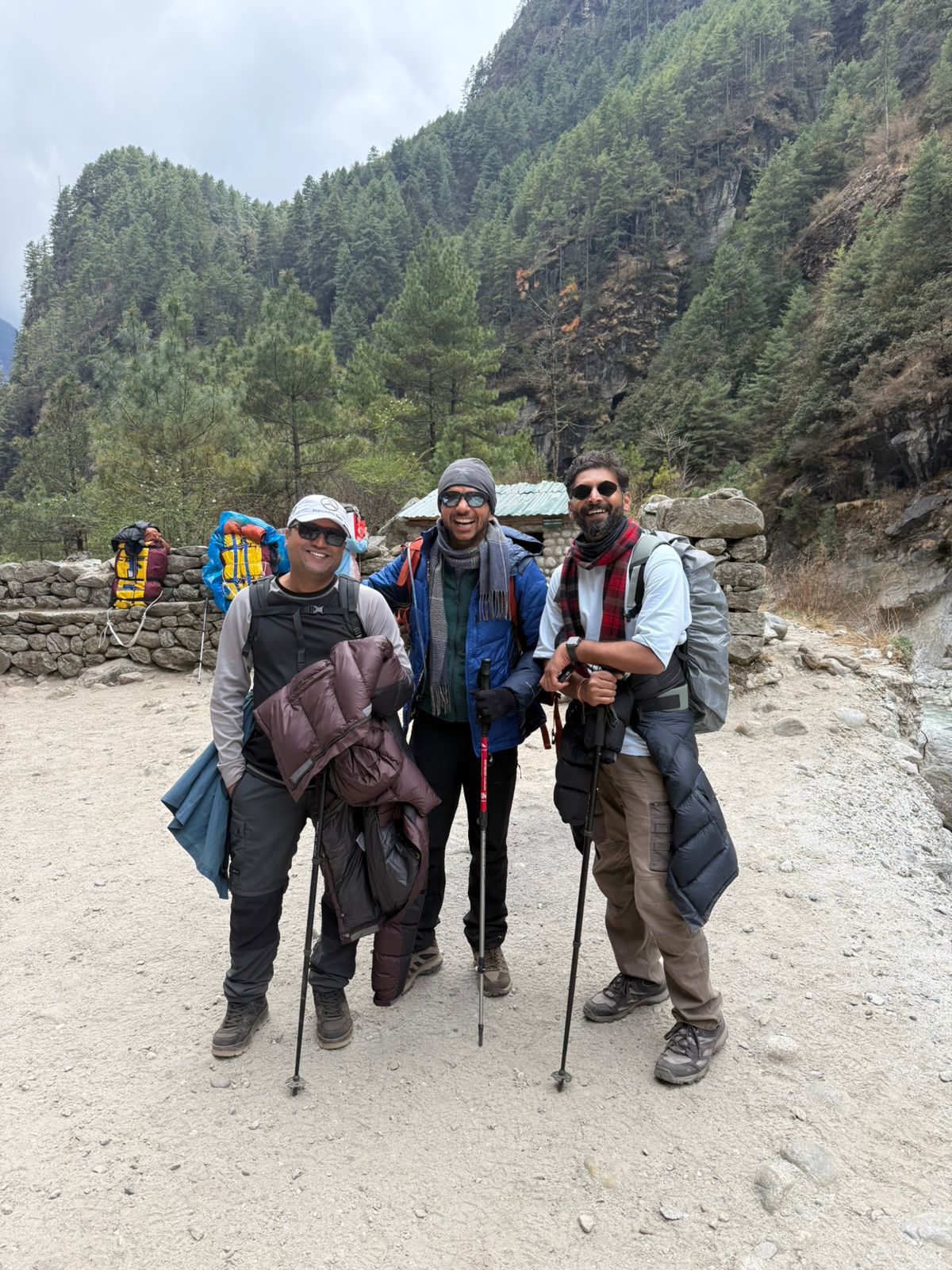
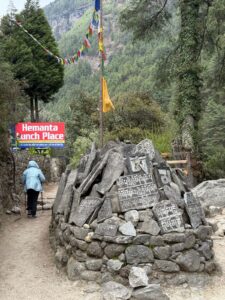
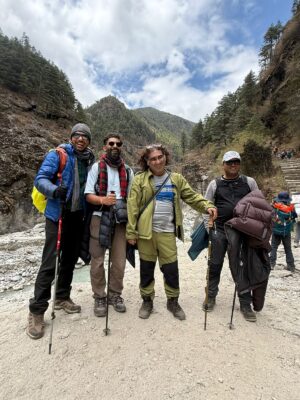
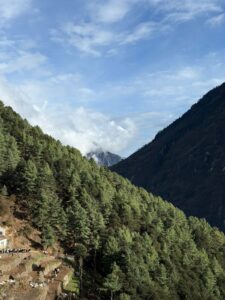
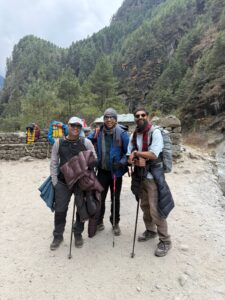
Namche Bazaar sits on a steep slope, so we had to go slowly, especially since I was often short of breath. Along the way, there were many small shops selling cold drinks, water, and snacks for trekkers. You can also stop at restaurants for lunch. I followed the locals’ advice and stuck to dal and rice for lunch and dinner, occasionally trying egg curry as well.
The trek was exhilarating, especially when we passed through a valley of yellow flowers that beautifully lined our path. As we climbed higher, it got colder and damper. Mist covered the path, and the occasional flutter of rain added to the chill. Thankfully, I was wearing a waterproof jacket and stayed dry.
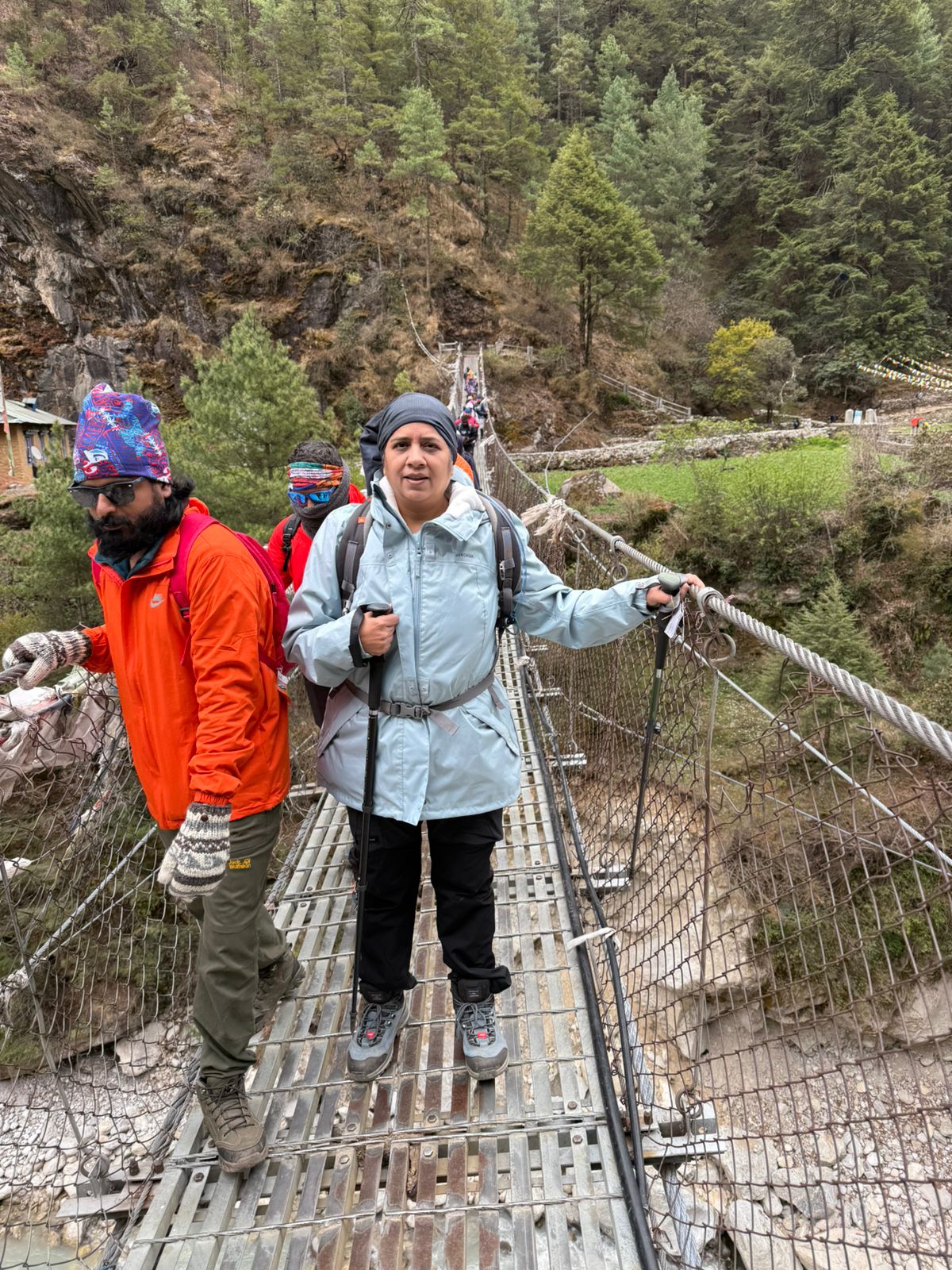
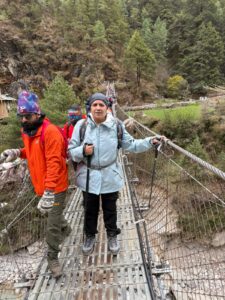
It was fun walking across the many suspension bridges that dotted our route. At first, I felt a bit scared walking on the wobbly steel bridges, but I soon got used to them. We crossed several small streams and waterways and passed by numerous restaurants and lodges along the way.
One of the highlights for me was the Khumjung Monastery, also known as Khumjung Gompa. This revered site holds great Buddhist significance and is located in the Khumbu region. Fascinatingly, the monastery houses what is believed to be the scalp of the Yeti. The relic is kept in a glass case for curious travellers to glimpse. The monastery is a peaceful place for meditation and plays an important role in preserving local Buddhist and Sherpa traditions.
In the 20th century, the monastery became a popular stop for trekkers, especially due to the involvement of Sir Edmund Hillary. He played a significant role in the region by building schools and hospitals, which greatly benefited the local communities.
The myth and legend of the Yeti are also quite intriguing. Locals believe the Yeti is a mystical creature — a giant ape-like being that roams the mountains, avoiding human contact. There has been scientific debate over whether the relic in the monastery is genuine, but the story and legend of the Yeti only add to the mystique of the region and the charm of the monastery.
After visiting the monastery, we finally reached Namche Bazaar by late evening and stayed overnight at the Namche Bazaar Lodge. The water was cold, but I managed to take a shower nonetheless. That evening, a heavy mist covered the sky — and what a relief it was to rest after such an exhausting seven-hour trek.
Add a review
Your email address will not be published. Required fields are marked *